
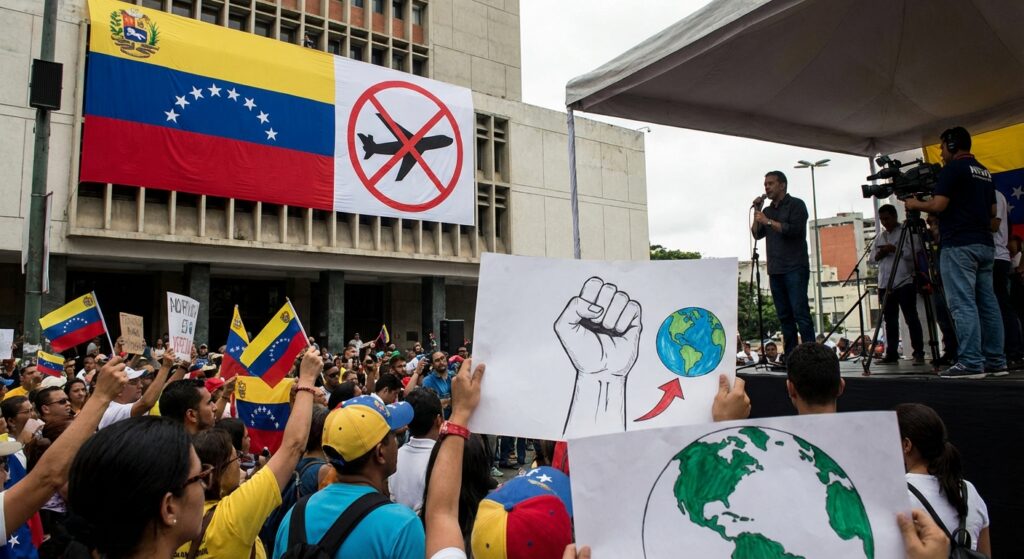
Venezuela Condemns Trump Airspace Closure Warning as a ‘Colonialist Threat’
In a significant escalation of diplomatic tensions, Venezuela has publicly condemned the recent warning issued by former US President Donald Trump regarding the possible closure of Venezuelan airspace. The Venezuelan government characterized the warning as a “colonialist threat,” highlighting deep-rooted geopolitical discord between the two nations. This development further complicates the already strained relations and raises questions about regional stability and international aviation security.
Related: Trump to Hold Venezuela Oval Office Meeting, Sources Say
Related: The Emerging MAGA Fractures: Understanding the Divisions Within a Political Movement
Related: The Next Big Battleground Test: A Wisconsin Race That Has Tortured Republicans
Background: The Context of the Airspace Closure Warning
The warning emerged amid ongoing political and economic turmoil in Venezuela, which has been the focus of intense scrutiny from the international community. The United States, under the influence of former President Trump’s policies, has maintained a critical stance towards the Venezuelan administration, often leveraging sanctions and diplomatic pressure to influence change.
The airspace closure warning pertains to the potential restriction or prohibition of air traffic over Venezuelan territory, a move that could have significant ramifications for commercial and cargo flights in the region. While the warning’s exact parameters remain somewhat ambiguous, it is widely interpreted as a strategic signal directed towards Venezuela’s government, possibly as leverage in broader geopolitical negotiations.
Venezuelan Government’s Response: Accusations of Colonialism
Venezuelan officials swiftly responded to the warning with strong rhetoric, denouncing it as a “colonialist threat”. This terminology reflects Venezuela’s historical sensitivity to foreign interventions and perceived infringements on its sovereignty. The term “colonialist” evokes the legacy of external powers exerting control over Latin American nations under the guise of political or economic interests.
The government emphasized its commitment to defending national sovereignty and airspace integrity. Venezuelan authorities framed the warning as an attempt to intimidate and undermine the country’s autonomy, signaling a refusal to acquiesce to external pressure tactics.
Geopolitical Implications of Airspace Restrictions
The possibility of closing Venezuelan airspace or imposing strict controls has wide-reaching implications beyond bilateral relations. Airspace management is a critical aspect of international aviation safety and economic connectivity. Any disruption could affect:
- Commercial flights operating over Venezuela en route to South American and Caribbean destinations.
- Air cargo routes essential for trade and humanitarian aid delivery.
- Regional airlines and international carriers that rely on Venezuelan airspace for efficient routing.
Such disruptions could increase operational costs for airlines, extend flight durations, and create logistical challenges for businesses and travelers. Moreover, airspace restrictions could exacerbate Venezuela’s already fragile economic situation by limiting trade and foreign investment opportunities.
Regional Reactions and Diplomatic Responses
Neighboring countries and regional organizations have expressed concern over the escalation. Latin American governments are closely monitoring the situation, wary of any developments that could destabilize the region. Some have called for dialogue and de-escalation to preserve peace and cooperation in the hemisphere.
International aviation bodies have also highlighted the importance of maintaining open and safe airspace corridors. The International Civil Aviation Organization (ICAO) underscores the need for neutral, apolitical management of airspace to ensure global connectivity and safety standards.
Historical Context: US-Venezuela Relations and Airspace Control
The tension over airspace control is not unprecedented in US-Venezuela relations. Historically, Venezuela has experienced various degrees of pressure and interference from the United States, often framed within the context of Cold War-era policies and modern geopolitical strategies. Airspace sovereignty remains a sensitive issue, symbolizing broader themes of national independence and foreign influence.
In recent years, the US has implemented sanctions and travel restrictions aimed at Venezuelan officials and sectors of the economy. The airspace warning can be viewed as an extension of this policy toolkit, leveraging aviation as a strategic domain in the geopolitical contest.
Consumer Impact and Aviation Industry Considerations
The aviation industry and consumers in the Americas could face tangible consequences if airspace restrictions are enacted or tensions escalate further. Potential impacts include:
- Flight delays and cancellations: Airlines may need to reroute flights to avoid Venezuelan airspace, increasing fuel consumption and operational costs.
- Increased ticket prices: The added costs from longer routes and logistical hurdles could be passed on to passengers, affecting affordability.
- Supply chain disruptions: Air cargo services critical to the delivery of goods, including medical supplies, could experience delays, affecting consumers and businesses.
Industry stakeholders are closely monitoring developments to adjust flight paths and operational strategies accordingly. Airlines operating in the region may also engage with regulatory authorities to navigate the evolving political landscape.
Forward-Looking Analysis: Potential Scenarios
Looking ahead, several scenarios could unfold depending on diplomatic engagements and geopolitical dynamics:
- Diplomatic Resolution: Negotiations may lead to a de-escalation of rhetoric and avoidance of airspace closures, preserving regional stability.
- Escalation and Enforcement: Actual closure or restrictions of Venezuelan airspace by either Venezuela or external actors could trigger broader regional tensions and economic consequences.
- International Mediation: Regional or global organizations might intervene to facilitate dialogue and ensure compliance with international aviation norms.
Each scenario carries distinct risks and opportunities for stakeholders, emphasizing the need for careful diplomatic navigation and adherence to international law.
Expert Insights
Industry experts and geopolitical analysts highlight the complexity of the situation, noting that airspace control is both a technical and symbolic matter. Aviation specialists stress the importance of maintaining uninterrupted air corridors for safety and economic reasons. Meanwhile, political analysts underscore that the use of airspace warnings as a diplomatic tool reflects broader strategic calculations aimed at exerting influence.
Experts also point out that labeling the warning as a “colonialist threat” resonates with Venezuela’s historical narrative and domestic audience, reinforcing national unity against perceived external aggression. Such rhetoric may strengthen the government’s position internally but complicates diplomatic engagement internationally.
Overall, analysts agree that the situation requires measured responses from all parties to avoid unintended escalation and to protect regional stability.
Conclusion
The recent warning by former US President Donald Trump about potentially closing Venezuelan airspace has triggered a strong condemnation from the Venezuelan government, which has labeled the move a “colonialist threat.” This development underscores the fragile and contentious nature of US-Venezuela relations, involving issues of sovereignty, geopolitical strategy, and international aviation security.
The implications of this conflict extend beyond diplomatic posturing, with tangible effects on commercial aviation, trade logistics, and regional stability. As stakeholders navigate this complex landscape, the priority remains to uphold international norms, ensure safety, and foster dialogue to prevent escalation.
Moving forward, the evolving situation demands close attention from governments, industry players, and international organizations to balance national interests with the imperative of maintaining open and secure skies.