
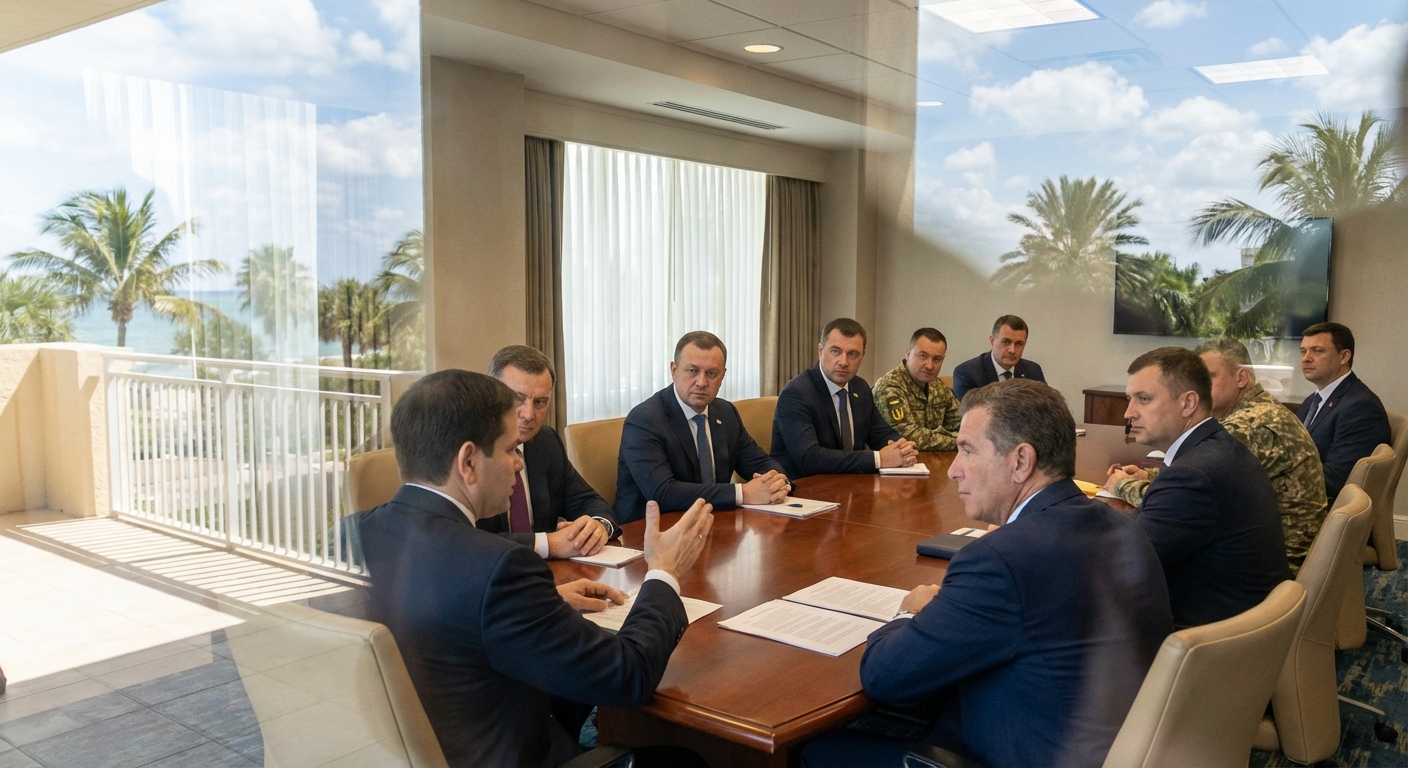

Rubio and Witkoff Meet Ukraine Negotiators in Florida Amid Trump’s Push to Broker Peace Deal
Introduction to Current Diplomatic Engagements
In a significant development within international diplomacy, Senator Marco Rubio and real estate investor Steve Witkoff have held meetings with Ukrainian negotiators in Florida. This engagement occurs against the backdrop of former President Donald Trump’s recent efforts to broker a peace deal aimed at resolving the ongoing conflict in Ukraine. The talks mark a noteworthy attempt by private American figures and political actors to influence a complex geopolitical crisis characterized by military conflict, regional instability, and global economic repercussions.
Related: Trump to Hold Venezuela Oval Office Meeting, Sources Say
Related: The Emerging MAGA Fractures: Understanding the Divisions Within a Political Movement
Related: The Next Big Battleground Test: A Wisconsin Race That Has Tortured Republicans
Background: Conflict Context and Diplomatic Challenges
The conflict in Ukraine, which has drawn considerable international attention, remains a deeply multifaceted crisis involving territorial disputes, national sovereignty, and security concerns across Eastern Europe. Various actors, including nation-states and international organizations, have attempted to mediate or influence outcomes through diplomatic channels, sanctions, and military aid. The situation has led to widespread humanitarian issues, disrupted global supply chains, and prompted intense debates regarding foreign policy and international law.
Against this complex backdrop, unofficial and semi-official diplomatic initiatives have emerged, reflecting both frustration with traditional diplomatic progress and a desire to explore alternative pathways toward peace. The involvement of Senator Rubio, a known figure in U.S. foreign policy, alongside Steve Witkoff, a prominent businessman, underscores an unconventional approach that blends political experience with private-sector influence.
Details of the Florida Meeting
The recent meeting in Florida brought together Ukrainian negotiators with Senator Rubio and Steve Witkoff. While the specific content of the discussions remains confidential, sources familiar with the talks indicate that the agenda focused on potential frameworks for ceasefire agreements, humanitarian corridors, and mechanisms to facilitate broader peace negotiations. These discussions also explored potential economic reconstruction aid and the role the United States might play in supporting Ukraine’s sovereignty and territorial integrity.
The choice of Florida as the venue is symbolic, given its political significance and accessibility for key American figures. The meeting represents an informal yet strategically important diplomatic channel, complementing ongoing official negotiations led by governments and international bodies.
Key Objectives and Negotiation Themes
- Exploring ceasefire possibilities and pathways to de-escalate hostilities.
- Discussing humanitarian support and safe passage for civilians affected by the conflict.
- Evaluating reconstruction plans and economic assistance for Ukraine’s post-conflict recovery.
- Assessing the role of the United States in mediating and supporting peace efforts.
- Addressing security guarantees and potential arrangements to prevent future conflicts.
Trump’s Role and Diplomatic Ambitions
Former President Donald Trump has publicly expressed interest in brokering a peace deal in Ukraine, positioning himself as a mediator capable of leveraging his international connections and political influence. His involvement introduces a complex dynamic, blending political ambitions with international diplomacy. Trump’s previous foreign policy approaches and relationships with foreign leaders add layers of both opportunity and controversy to the current peace efforts.
Observers note that Trump’s push for a deal reflects broader strategic considerations, including domestic political positioning and the desire to redefine U.S. engagement in global conflicts. The involvement of figures like Rubio and Witkoff suggests an attempt to build a coalition that spans political, business, and diplomatic spheres, potentially providing new momentum to stalled negotiations.
Implications for U.S. Foreign Policy and International Relations
The Florida meeting and Trump’s peace initiative have multiple implications for U.S. foreign policy and the international community’s approach to the Ukraine conflict. Firstly, it signals a diversification of diplomatic actors beyond official government channels, which may expedite dialogue but also complicate coordination with traditional diplomatic frameworks.
Secondly, the initiative highlights ongoing debates within the United States regarding the balance between military support for Ukraine and diplomatic efforts to achieve a negotiated settlement. The potential for private diplomacy raises questions about transparency, accountability, and the coherence of U.S. foreign policy objectives.
Lastly, the engagement may influence international stakeholders, including European allies and global organizations, by introducing new proposals or shifting negotiation dynamics. The success or failure of this initiative could shape future conflict resolution models and U.S. leadership roles on the world stage.
Potential Risks and Challenges
- Coordination complexities between private actors and official government representatives.
- Perceptions of legitimacy and authority of unofficial diplomatic efforts.
- Risk of undermining established negotiation processes or international consensus.
- Domestic political ramifications for involved U.S. figures and their affiliations.
- Uncertainty regarding the receptiveness of Ukrainian and opposing parties to informal peace proposals.
Expert Insights
Geopolitical analysts emphasize that while unofficial diplomacy can sometimes break negotiation deadlocks, it requires careful alignment with broader strategic goals and clear communication among all stakeholders. Experts note that the involvement of high-profile American political and business figures can bring fresh perspectives and resources but also risks politicizing sensitive negotiations.
International relations scholars suggest that the Florida talks reflect a growing trend of hybrid diplomacy, where non-state actors and private individuals play increasingly prominent roles in conflict resolution. They caution that the effectiveness of such approaches depends on transparency, respect for international norms, and integration with official diplomatic efforts.
Humanitarian organizations stress that peace initiatives must prioritize civilian safety and human rights, advocating for inclusive negotiations that consider the needs of affected populations. Economic experts underline the importance of planning for post-conflict reconstruction to ensure sustainable recovery and long-term stability.
Consumer and Global Impact
The ongoing Ukraine conflict has had profound effects on global markets, energy supplies, and food security. Progress toward a peace deal could stabilize international trade and reduce volatility in commodities critical to consumers worldwide. Conversely, prolonged conflict risks exacerbating inflation, supply chain disruptions, and humanitarian crises.
For American consumers, diplomatic breakthroughs may influence energy prices and geopolitical risk perceptions, affecting investment and economic confidence. Globally, successful peace negotiations could restore confidence in international institutions and encourage cooperative approaches to global challenges.
Forward-Looking Analysis
Looking ahead, the Florida meeting represents a tentative step within a complex negotiation landscape. The outcomes depend heavily on the willingness of all parties to engage constructively and the ability of American actors to coordinate with international partners. The evolving nature of the conflict and geopolitical alignments will shape the feasibility of any proposed peace frameworks.
Monitoring developments from this initiative will be critical for policymakers, analysts, and the public. Continued engagement, transparency, and adherence to diplomatic norms will be essential to translating private efforts into meaningful progress toward peace.
Conclusion
The meeting between Senator Rubio, Steve Witkoff, and Ukrainian negotiators in Florida, coupled with former President Trump’s push to broker a peace deal, reflects an innovative yet challenging approach to resolving one of the most pressing international conflicts today. While the full impact remains uncertain, these efforts underscore the urgency and complexity of finding diplomatic solutions amid ongoing military tensions. The involvement of diverse American actors highlights the intersection of politics, business, and diplomacy in addressing global crises. Moving forward, achieving a sustainable peace will require coordinated action, careful negotiation, and a commitment to the principles underpinning international stability and security.
