
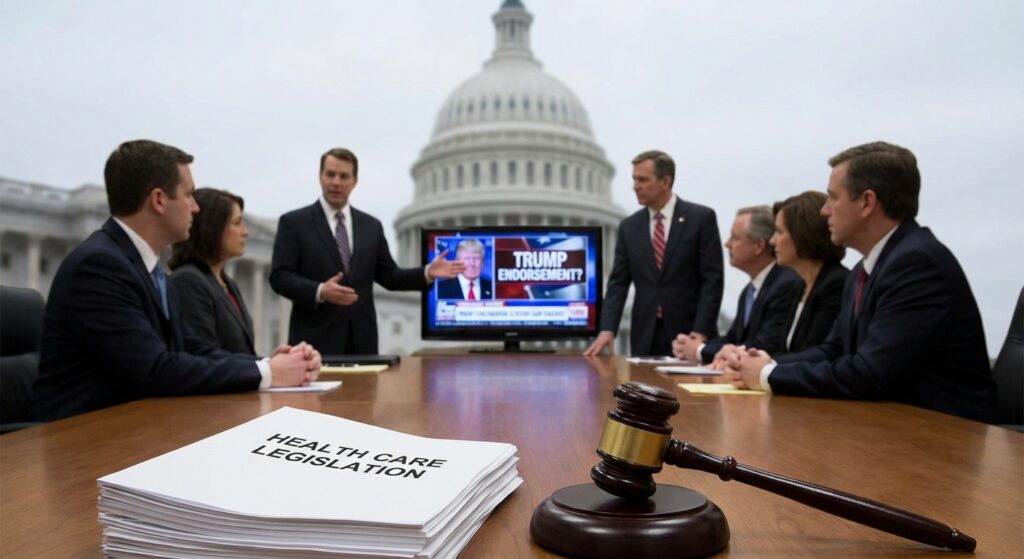
Capitol Agenda: Health Deal Hinges on Trump Influence and Congressional Dynamics
In the rapidly evolving landscape of Capitol Hill, the pursuit of a comprehensive health deal has encountered a complex political crossroads centered on the influence of former President Donald Trump. As lawmakers navigate contentious negotiations, the role of Trump’s political sway and its ripple effects throughout Congress have become pivotal in determining the fate of key healthcare legislation.
Related: Trump to Hold Venezuela Oval Office Meeting, Sources Say
Related: The Emerging MAGA Fractures: Understanding the Divisions Within a Political Movement
Related: The Next Big Battleground Test: A Wisconsin Race That Has Tortured Republicans
Background: The Stakes of the Health Deal
The current health deal under consideration aims to address several pressing concerns within the American healthcare system, including drug pricing reforms, expanded coverage options, and funding for public health initiatives. These priorities align with ongoing efforts to improve affordability and accessibility in healthcare, which remain top concerns among constituents nationwide.
However, the legislative process for this health deal has been mired in political friction. At the center of this tension is the impact of Trump’s endorsement patterns, policy positions, and the broader influence he continues to exert over a significant faction of lawmakers, particularly within the Republican caucus.
Trump’s Political Influence: A Key Determinant
Former President Trump’s political capital remains a decisive factor in shaping legislative outcomes on Capitol Hill. His ability to mobilize a devoted voter base and influence Republican lawmakers creates a unique dynamic that both parties must consider strategically. For many GOP members, aligning with or opposing Trump’s stance on health policy carries substantial electoral implications.
Within the context of the health deal, Trump’s position has reportedly created divisions regarding the scope and funding mechanisms of proposed reforms. Some Republican lawmakers are hesitant to support measures perceived as expansions of government involvement in healthcare, citing Trump’s historical messaging favoring deregulation and market-driven solutions.
Conversely, moderate Republicans and Democrats are seeking common ground to advance elements of the deal that address urgent healthcare challenges. This balancing act underscores the complexity of finding consensus amid ideological divides amplified by Trump’s lingering influence.
Congressional Negotiations: Navigating a Divided Landscape
The negotiation process is characterized by a delicate interplay among Senate and House members, committee leaders, and the executive branch. Key committees involved in healthcare legislation, such as the Senate Health, Education, Labor, and Pensions (HELP) Committee and the House Energy and Commerce Committee, are negotiating provisions that reflect competing priorities.
Major points of contention include:
- Drug Pricing Reforms: Proposals to cap out-of-pocket costs and increase price transparency face resistance from industry stakeholders and some GOP lawmakers wary of regulatory overreach.
- Medicaid Expansion and Coverage: Debate continues over the extent to which Medicaid should be expanded or modified, with ideological divides influencing support levels.
- Funding for Public Health Initiatives: Disagreements persist regarding allocation of federal funds for pandemic preparedness, mental health services, and rural healthcare support.
These issues are further complicated by partisan strategies, with each side leveraging Trump’s influence as a political tool to negotiate terms that appeal to their respective bases.
Consumer Impact: What the Health Deal Could Mean
The outcome of these negotiations holds significant implications for American consumers. Should a bipartisan agreement be reached, anticipated benefits include:
- Lower Prescription Drug Costs: Increased transparency and pricing caps could reduce financial burdens on patients.
- Expanded Health Coverage: More Americans may gain access to affordable insurance options, particularly in underserved communities.
- Enhanced Public Health Infrastructure: Improved funding could strengthen responses to future health emergencies and chronic disease management.
However, failure to reach a consensus risks prolonging uncertainty in healthcare markets and delays in addressing systemic challenges. Consumers may continue facing high costs and uneven access to care, exacerbating existing disparities.
Expert Insights: Navigating Political Influence in Healthcare Legislation
Industry analysts and political experts emphasize the critical role that political leadership and influence play in shaping health policy outcomes. A senior policy analyst noted that:
“The interplay between former President Trump’s ongoing influence and congressional priorities exemplifies the challenges of policymaking in today’s polarized environment. Successful legislation will require pragmatic compromise that transcends political allegiances while addressing the pressing needs of the healthcare system.”
Healthcare economists highlight that sustainable reforms must balance fiscal responsibility with equitable access, cautioning against policies that could unintentionally increase costs or reduce coverage.
Political scientists observe that the current environment demands strategic negotiation skills, where understanding the nuances of intra-party dynamics and public opinion is essential for advancing legislation.
Forward-Looking Analysis: The Road Ahead for the Health Deal
Looking forward, several key factors will influence the trajectory of the health deal negotiations:
- Continued Trump Engagement: Any public statements or endorsements by Trump regarding the health deal will likely sway GOP lawmakers’ positions.
- Public Opinion and Advocacy: Grassroots campaigns and stakeholder lobbying efforts may pressure legislators to prioritize consumer-friendly provisions.
- Upcoming Legislative Deadlines: Timelines for budget reconciliation and other procedural mechanisms could accelerate or impede progress.
- Executive Branch Involvement: Coordination between the White House and Congress will be vital in aligning policy goals and messaging.
Successful passage of the health deal would represent a significant legislative achievement amid a fragmented political climate. Conversely, stalemate risks eroding public trust and delaying critical healthcare improvements.
Conclusion
The unfolding negotiations over the health deal on Capitol Hill underscore the intricate relationship between political influence and policymaking. Former President Trump’s role as a political force continues to shape the contours of legislative deliberations, reflecting broader partisan and ideological divides.
As lawmakers strive to reconcile competing priorities and public demands, the ultimate outcome will have profound implications for the future of American healthcare. Stakeholders across the political spectrum and the general public will be closely monitoring developments, hopeful for a resolution that enhances affordability, access, and quality of care.
In this dynamic political environment, the health deal serves as a critical test of the government’s capacity to deliver substantive reforms amid complex political realities.