
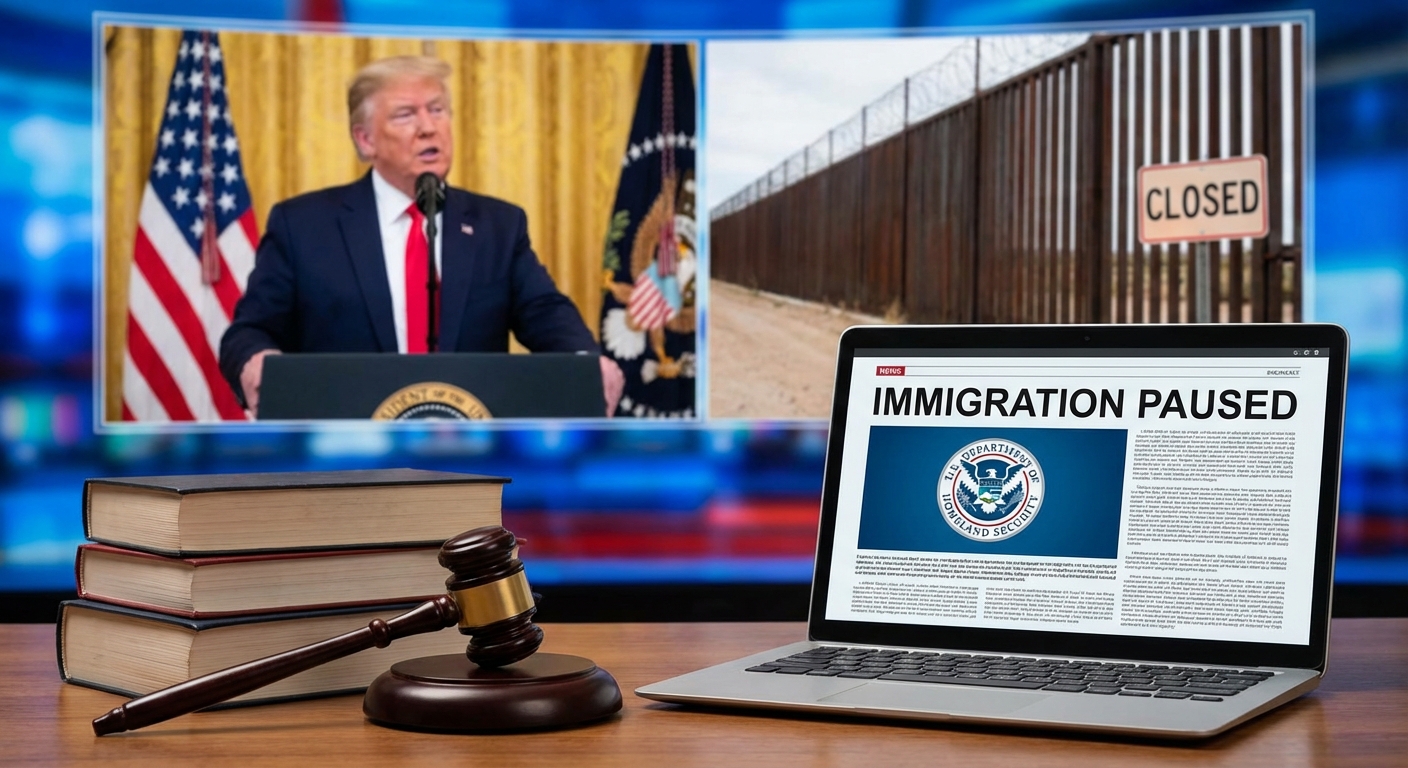

Trump Highlights Federal Law Granting Presidential Power to Halt Immigration Amid Escalating Crackdown
In a recent development that has stirred public and political discourse, former President Donald Trump has drawn attention to a federal statute that empowers the President of the United States to suspend or restrict immigration under specific conditions. This statement comes amid an intensifying federal crackdown on immigration enforcement, marking a significant moment in the ongoing debate over immigration policy and executive authority.
Related: Trump to Hold Venezuela Oval Office Meeting, Sources Say
Related: The Emerging MAGA Fractures: Understanding the Divisions Within a Political Movement
Related: The Next Big Battleground Test: A Wisconsin Race That Has Tortured Republicans
Understanding the Federal Law Behind Presidential Immigration Authority
The law referenced by Trump is a provision within the Immigration and Nationality Act (INA), which grants the president broad discretionary power to regulate the entry of noncitizens into the country. Specifically, Section 212(f) of the INA authorizes the president to suspend the entry of all aliens or any class of aliens if their admission would be detrimental to the interests of the United States.
This legal mechanism has historically been invoked in various contexts, including national security concerns, public health emergencies, or other situations deemed harmful to the nation’s welfare. While its use has occasionally sparked legal challenges and public debate, it remains a powerful tool for shaping immigration policy rapidly in response to evolving circumstances.
Context of the Current Immigration Crackdown
The renewed emphasis on this federal law coincides with escalated immigration enforcement actions by federal agencies. Recent days have seen increased border patrol operations, expanded detention measures, and stricter scrutiny of visa applications. These efforts are part of a broader governmental strategy aimed at curbing unauthorized immigration and addressing concerns over border security and immigration system integrity.
Officials assert that the measures seek to uphold the rule of law and protect national security, while critics argue that some actions may disproportionately affect vulnerable populations and raise humanitarian concerns. This complex dynamic underscores the challenges policymakers face in balancing enforcement and compassion.
Historical Use of Section 212(f) and Its Legal Challenges
Section 212(f) has been invoked by several administrations to address various immigration-related issues. For example, past presidents have used it to impose travel bans on countries perceived as security threats or to respond to epidemics affecting global travel.
However, the statute’s application has also led to judicial scrutiny, with courts examining whether such presidential actions align with constitutional principles and statutory limits. Legal experts note that while the law grants significant latitude, it is not without checks and balances, including potential congressional oversight and litigation.
Implications for Immigration Policy and Governance
The spotlight on this federal law and the ongoing enforcement intensification hold broad implications for immigration policy. They highlight the executive branch’s capacity to unilaterally alter immigration flows, which can have ripple effects across diplomatic relations, economic sectors, and immigrant communities.
- Policy Flexibility: The law offers presidents a flexible instrument to respond quickly to emerging threats or changing conditions without waiting for legislative action.
- Potential for Controversy: Use of the law can provoke political and legal disputes, particularly if perceived as targeting specific groups or lacking transparency.
- Impact on Immigrant Populations: Enforcement escalations may affect the lives of thousands, influencing migration patterns and community stability.
- Role of Congress: While the law grants executive authority, Congress retains the power to enact or revise immigration statutes and oversee executive implementation.
Expert Insights on Presidential Power and Immigration Enforcement
Legal scholars and immigration policy experts emphasize the significance of the INA’s Section 212(f) as a tool for presidential discretion. They note that while the statute is legally robust, its use must be carefully calibrated to ensure compliance with constitutional protections and international obligations.
Experts caution against overreliance on executive power to address complex immigration challenges, advocating for comprehensive legislative solutions that reflect the country’s economic needs, humanitarian commitments, and security concerns.
Additionally, policy analysts observe that enforcement intensification often triggers broader social and economic consequences, including labor market impacts and community relations. They recommend transparent policymaking and stakeholder engagement to mitigate adverse effects.
Consumer and Community Impact of Immigration Enforcement Intensification
The increased enforcement activities reverberate beyond government agencies, affecting immigrant families, businesses, and local communities. Heightened immigration restrictions may:
- Disrupt family unity through detentions and deportations.
- Create labor shortages in industries reliant on immigrant workers.
- Increase legal and social service demands to assist affected populations.
- Heighten tensions in communities with diverse populations.
Understanding these impacts is critical for stakeholders as they navigate the evolving immigration landscape.
Forward-Looking Analysis: What to Expect Next
As federal enforcement actions continue to escalate, observers anticipate ongoing debates around the scope and limits of presidential immigration authority. Key areas to watch include:
- Legal Challenges: Potential court cases testing the boundaries of Section 212(f) and related executive actions.
- Legislative Responses: Congressional initiatives aimed at clarifying or reforming immigration laws.
- Policy Shifts: Adjustments in enforcement priorities or humanitarian considerations depending on political leadership and public opinion.
- International Relations: Diplomatic engagement with countries affected by U.S. immigration policies.
These dynamics will shape the trajectory of U.S. immigration policy and its broader social and economic implications.
Conclusion
The recent emphasis by former President Trump on the federal law granting presidential power to halt immigration underscores the enduring significance of executive authority in immigration governance. As enforcement intensifies, the interplay of legal frameworks, policy objectives, and human impacts becomes increasingly complex.
For policymakers, legal experts, and communities alike, navigating this environment requires a nuanced understanding of the legal provisions, potential consequences, and the need for balanced, transparent decision-making. The evolving situation remains a critical area for ongoing observation and analysis in the current year.
