
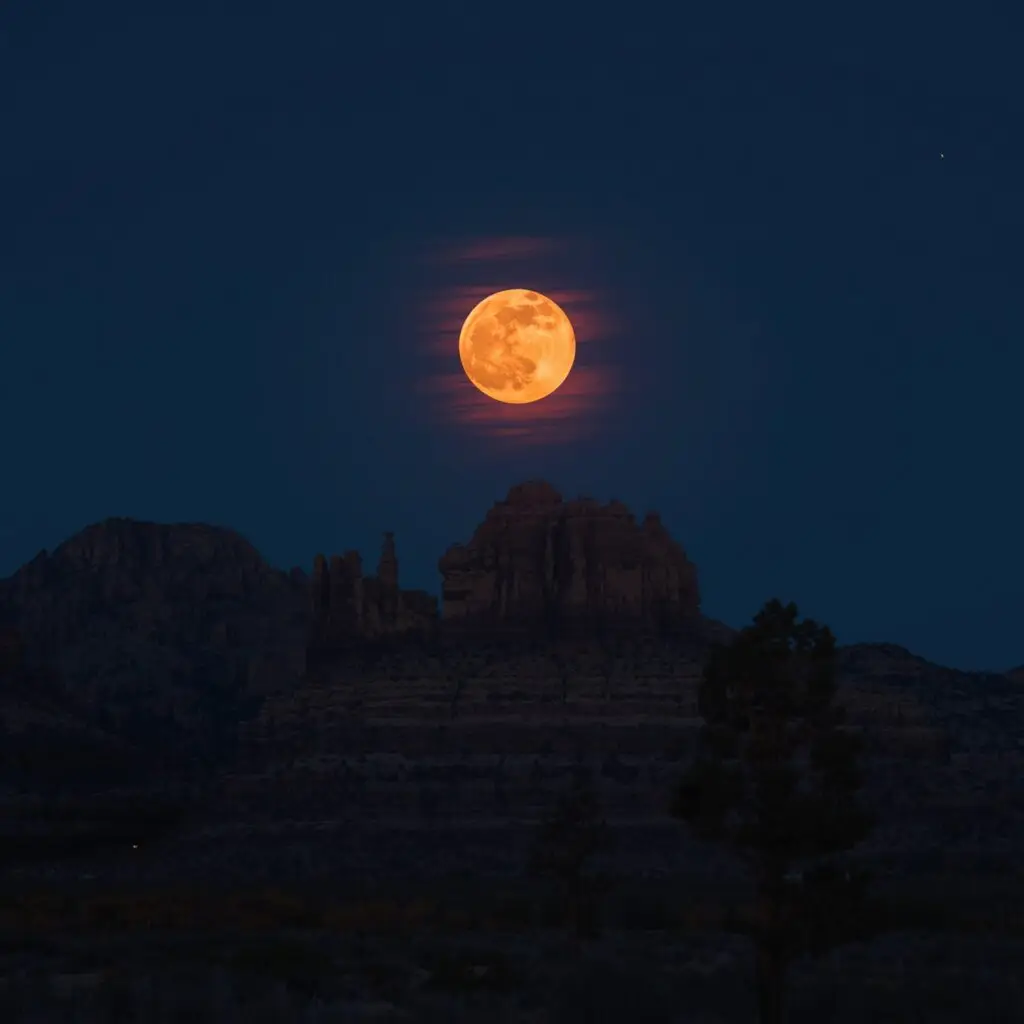
Arizona is set to offer some of the best viewing opportunities in the United States for December’s Cold Moon Supermoon, ranking second nationally for optimal visibility. This celestial event, which captures the attention of astronomers, photographers, and casual sky watchers alike, promises a spectacular display as the moon reaches its closest point to Earth for the month, appearing larger and brighter than usual.
Related: Why Singing Is Surprisingly Good for Your Health – BBC
Related: U.S. Halts All Asylum Decisions and Pauses Visa Processing for Afghan Nationals
Related: The Next Big Battleground Test: A Wisconsin Race That Has Tortured Republicans
Understanding the Cold Moon and the Supermoon Phenomenon
The Cold Moon is the traditional name given to the full moon in December, marking the onset of colder winter months in the Northern Hemisphere. This name has roots in Native American and early colonial American lunar calendars, reflecting the seasonal changes and environmental conditions associated with this time of year.
A Supermoon occurs when a full moon coincides with the moon’s perigee — the point in its elliptical orbit closest to Earth. This proximity causes the moon to appear up to 14% larger and 30% brighter than when it is at its farthest point, known as apogee. The combination of a Cold Moon and Supermoon creates an especially striking natural spectacle.
Why Arizona Ranks No. 2 for Viewing the Cold Moon Supermoon
Arizona has earned its position as the second-best state in the country to witness the Cold Moon Supermoon due to several key factors:
- Clear Skies: Arizona’s desert climate offers some of the clearest night skies in the U.S., with minimal cloud cover and low humidity during December.
- Low Light Pollution: Many areas in Arizona, especially outside of major cities like Phoenix and Tucson, maintain low levels of light pollution, enhancing visibility of celestial events.
- Optimal Timing: The timing of the moonrise and moonset in Arizona aligns well with nighttime hours, providing extended opportunities for observation.
- Elevation: Elevated regions and mountainous areas reduce atmospheric interference, making the moon appear even more vivid.
These conditions combine to create an ideal environment for both amateur and professional astronomers to observe and photograph the Cold Moon Supermoon.
Comparative Ranking and What It Means for Observers
While Arizona ranks No. 2 in the country, the top spot is generally held by locations with similarly favorable atmospheric conditions and accessibility. The ranking takes into account factors such as weather forecasts, air quality, and geographic positioning relative to the moon’s path.
For observers, this ranking translates into:
- Higher likelihood of clear, unobstructed views.
- Greater potential for vivid and detailed moon photographs.
- Improved visibility of accompanying celestial features like stars and planets.
Arizona’s position near the top of this list reflects its growing recognition as a prime location for astronomical observation and stargazing tourism.
Background: The Cultural and Scientific Significance of the Cold Moon
The Cold Moon holds cultural importance across many indigenous and historical traditions. Native American tribes named moons based on natural events, and the Cold Moon signifies the approach of winter’s harshness, often associated with shorter daylight hours and colder temperatures.
Scientifically, full moons have been studied for their influence on the Earth’s tides and human behavior, although much of this remains under research. The Supermoon phenomenon, in particular, has garnered increased attention due to its dramatic visual impact and the opportunity it offers for scientific observation of lunar surface details.
Implications for Tourism and Local Economy
Arizona’s ranking is expected to stimulate interest among tourists and local residents eager to experience the Cold Moon Supermoon. The state’s tourism sector frequently capitalizes on natural phenomena, offering guided night sky tours, astrophotography workshops, and educational programs at observatories and parks.
This event could drive increased visitation to:
- State and national parks known for dark skies, such as the Grand Canyon and Kitt Peak National Observatory.
- Desert locations outside urban centers where light pollution is minimal.
- Local astronomy clubs and educational institutions hosting special viewing events.
Such activities not only promote science education but also support local businesses including hospitality, dining, and retail sectors.
Practical Tips for Observing the Cold Moon Supermoon in Arizona
For those planning to observe the Cold Moon Supermoon, experts recommend the following:
- Check Local Weather: Ensure clear skies by reviewing up-to-date forecasts.
- Find Dark Sky Locations: Seek out areas away from city lights to maximize visibility.
- Bring Appropriate Gear: Binoculars or telescopes can enhance the viewing experience, but the naked eye can also appreciate the event.
- Arrive Early: The moonrise can be spectacular, and early arrival allows for setup and acclimatization to darkness.
- Dress Warmly: Even in Arizona, December nights can be chilly, especially at higher elevations.
Expert Insights: Astronomy Community Perspectives
Astronomers and skywatching professionals emphasize the educational and inspirational value of the Cold Moon Supermoon. They highlight that such events serve as gateways for public engagement with space science and foster a deeper appreciation for our natural world.
Experts note that while the Supermoon is a visually striking phenomenon, it also offers practical opportunities to study lunar geology and refine imaging techniques. Observatories and research institutions often coordinate public outreach during these events, leveraging the heightened public interest.
Additionally, the astronomy community advocates for the protection of dark skies and reduction of light pollution, which are critical for sustaining the quality of observations not only for this event but for ongoing scientific research.
Looking Ahead: Future Lunar Events and Observing Opportunities
Following December’s Cold Moon Supermoon, enthusiasts can look forward to other lunar and astronomical occurrences throughout the year. These include lunar eclipses, blue moons, and perigee-syzygy alignments, each offering unique viewing experiences.
Arizona’s favorable conditions will continue to make it a premier destination for skywatching. Increasing public interest in astronomy and technology-driven observation tools, such as smartphone apps and digital telescopes, are making events like the Cold Moon Supermoon more accessible to a broader audience.
Stakeholders in tourism, education, and science are encouraged to collaborate to maximize the benefits of these natural phenomena, ensuring continued engagement and economic opportunity.
Conclusion
Arizona’s ranking as the No. 2 state in the U.S. for viewing December’s Cold Moon Supermoon underscores the state’s exceptional natural conditions for astronomical observation. With clear skies, low light pollution, and favorable timing, residents and visitors alike can anticipate an impressive and memorable lunar display.
This event not only enriches the cultural and scientific landscape but also presents tangible benefits for tourism and local economies. By preparing appropriately and taking advantage of Arizona’s unique environment, observers can fully experience the wonder of the Cold Moon Supermoon and deepen their connection to the cosmos.